
Marathon Des Sables Camp Life – My Top Tips
This article was originally published in 2021, and has been updated in April 2026 to reflect updates to the race format and organisation.
The thing I like the most about multi-stage races, and what makes them different from other races, is the camp life. The Marathon des Sables camp forms a significant part of the whole race experience. Furthermore, how you manage yourself whilst in camp, and not just on the course, is important for your overall success in the race.
It is worth noting that how much time you have available to actually spend in the Marathon des Sables camp varies greatly depending on your race time. Of course top runners have a lot more time, arriving to bivouac at lunch time or even mid-morning. In the 2026 edition, the stage starts were as early as 5am or 6am. Walkers may arrive as the sun is setting and it's nearly bed time, greatly reducing the time available for foot care, e-mails, dinner etc. Bear this in mind when you plan your race.
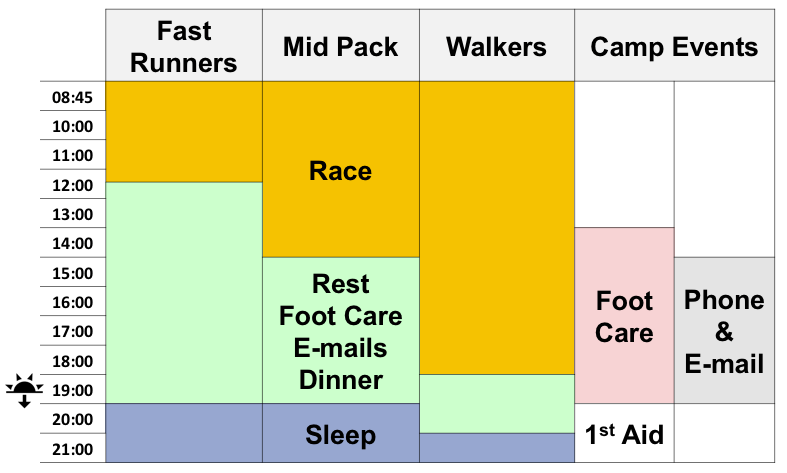
Indicative race day time table by competitor type. Stage starts ar typically earlier than the chart indicates.
Arriving to Marathon des Sables Camp
You will arrive to the MDS bivouac on Friday and the race starts on Sunday. At least it has been that way in the past. Firstly, please don't be that one person who every year loses their luggage. Pack all you need for the race in your hand luggage. And who cares if you turn up at the airport wearing gaiters?
The journey to MDS bivouac is by coach and typically takes 6 hours or more. You get water and a packed lunch but if you would like any extra snacks bring this yourself. Also bear in mind that there are no charging facilities available on the coach nor in bivouac. If you are reliant on your phone or other electronics before the race, bring a portable charge unit.
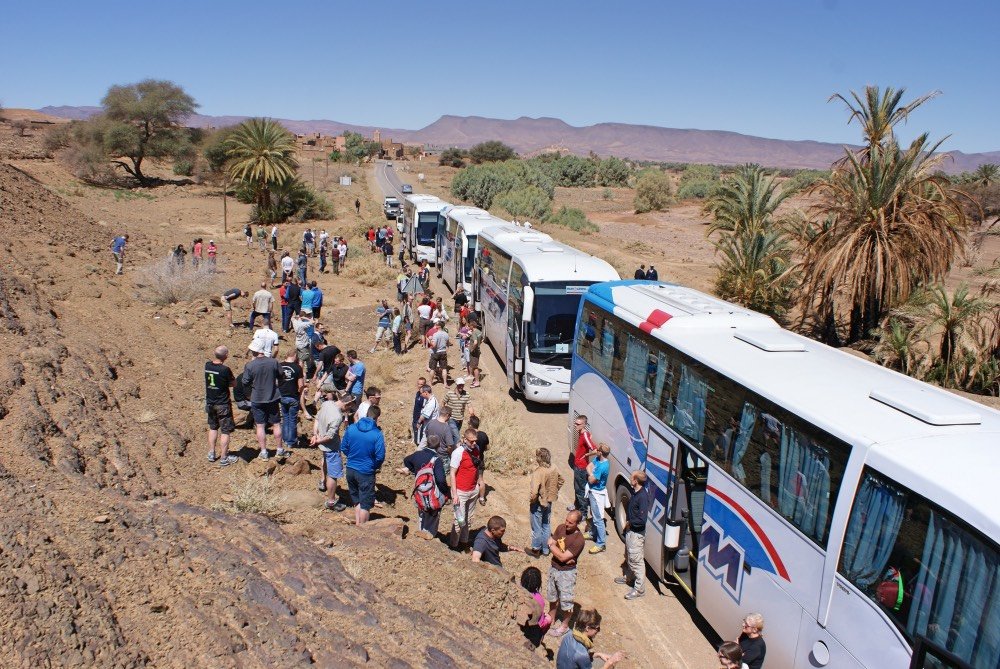
Tent allocation is now sorted in advance via the competitor portal. You should therfore know your tent number and tent mates before arriving in bivouac. This makes the process significantly less chaotic than in the past.
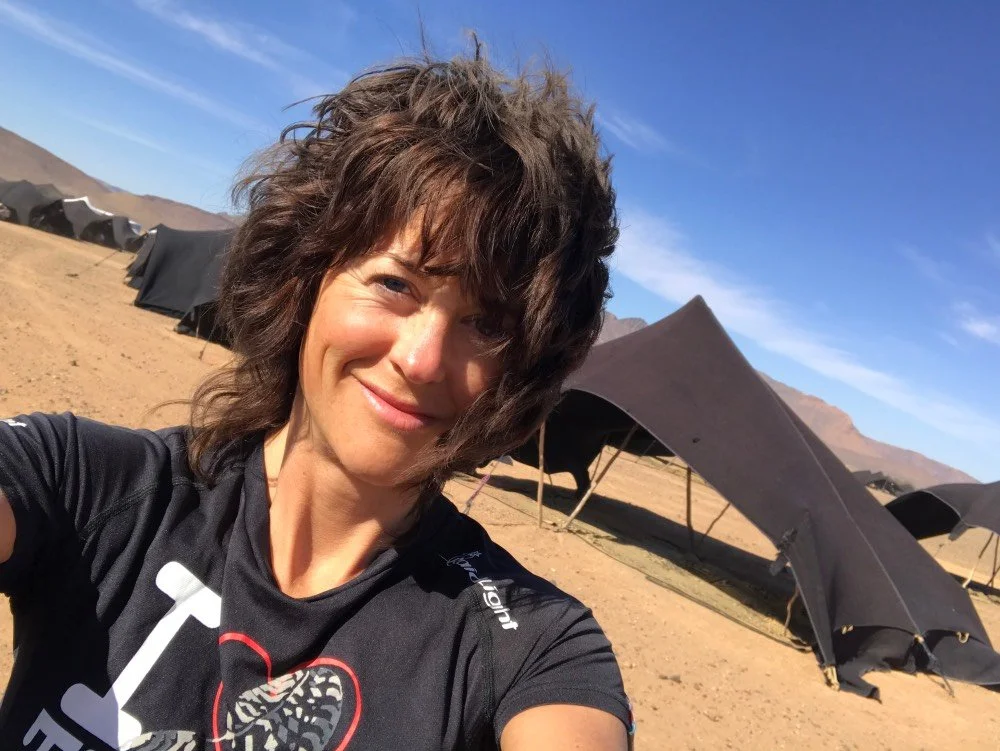
Arrival in bivouac
Remember to bring toilet roll not just for the race, but also for the time pre-race. If you are unsure about any items of your kit, for example "do I need a spare base layer?", "do I need a sleeping bag liner?", you do have one night in bivouac to judge the temperature somewhat and decide.
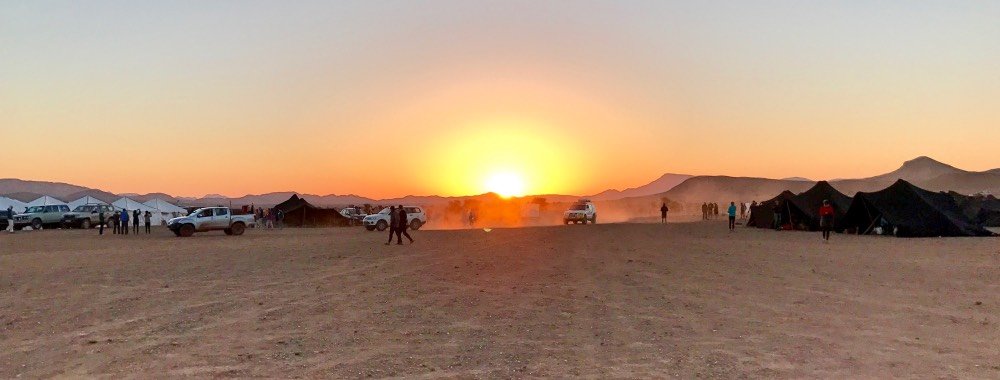
Sunrise in bivouac after first night
Saturday is the day for kit check and when you hand in your luggage. Typically kit check is according to a predefined schedule, based on race number or tent number, and can be as early as 8:30am or in the afternoon. You will be communicated the procedure and the allocated time slot. You first hand in your luggage, and you then go through kit check.
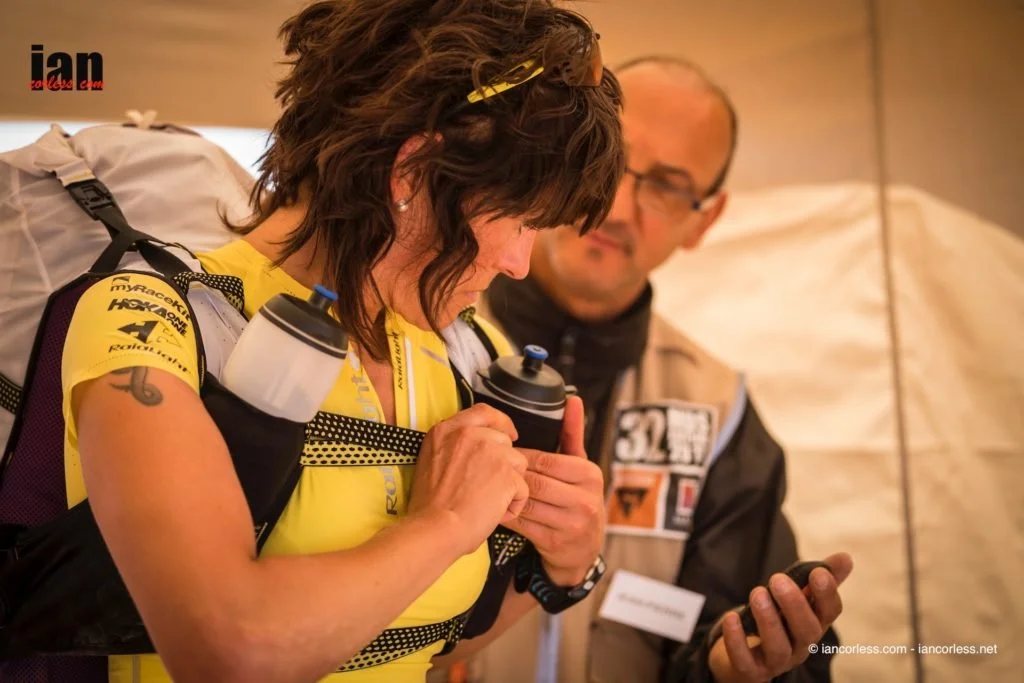
Kit check - time to get the Spot Tracker fitted. Photo: Ian Corless
As the kit check procedure usually is cause for much confusion, please note the following:
You have NO access to your luggage after kit check until the end of the race on return to Ouarzazate.
You can NOT dispose of items during the race and receive them back at the end. If you bin anything, or give it away, it is gone.
You wear your race gear from this point onwards. That is unless you have packed any extra clothes that you are happy to donate to the Berbers once the race starts the following day.
This is where the race staff check the weight of your backpack. It should adhere to the minimum weight defined in the race rules. At the point of writing this is 6.5kg. This includes all your food including Day 1 breakfast. However you will eat your Day 1 breakfast before you start running.
GPS Spot tracker is normally added to your pack AFTER the weigh-in. You typically have been given the road book before though.
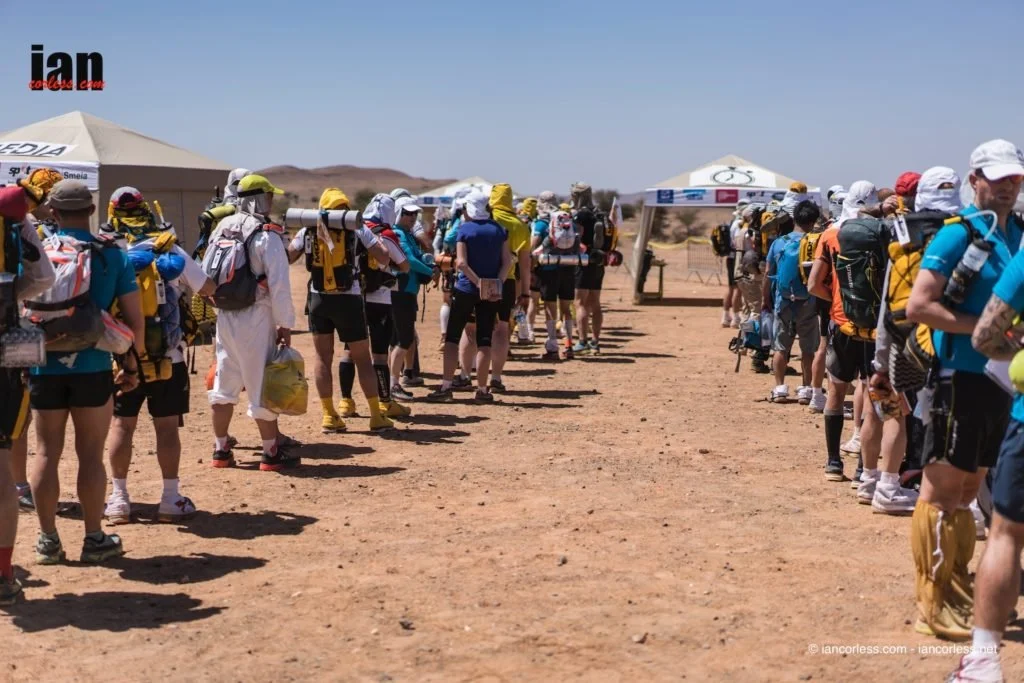
Queue at kit check. Bring a water bottle as it can get hot and take time! Photo: Ian Corless
The self-sufficiency starts on arrival in Bivouac. Therefore, make sure that you have food to eat for Friday dinner, and all of Saturday, in addition to the race specifc food. You do not need to bring the food for Saturday to kit check, leave it in your tent.
My Top Tips for Marathon des Sables Race Camp
1 - Be Organised
Your gear should be either on you or in your backpack. There can be sudden storms and if your stuff is scattered around it can quickly disappear. Not so much fun to run in one shoe, lose a water bottle or have your sleeping mat blow away - huh? Think about this particularly when you go to bed at night. Is everything secured so it can't be swept away?
Allow two hours from waking up to being ready at the start line. This may seem like a lifetime, but believe me: when your whole life resides inside a small backpack that you keep constantly packing and unpacking, this is no time at all.
Everything takes longer than you think
You need to prepare breakfast, eat breakfast, deflate and/or fold your mat, pack your sleeping bag, pack your gear, go to the toilet (possibly long queues!), put on sun cream, fix your race number, fix your gaiters on your shoes, organise your race snacks into the right pockets, collect water, fill your water bottles, check the road book, etc etc. If I have one tip for you it is to fix your feet the night before. In the morning you will have no time for this...
See my blog on preparing your shoes and feet here.
2 - Be Self-sufficient
MDS camp life is hard, really hard. The smallest tasks can turn to insurmountable obstacles when you are dehydrated, hungry, too hot and exhausted. Therefore, don't try to help everyone else at expense of your own race. Particularly don't make any promises about this beforehand. Remember, everyone signed up knowing that this is a self-sufficient race that was always going to be hard.
Help yourself first
Please note that I am not saying we shouldn't be looking out for each other, of course we should. I am just saying that everyone needs to first look after themselves. It's a bit like the safety briefing on an aircraft: "put your own oxygen mask on first, before assisting others". The logic is simple. If you care so much for others that you forget about yourself, chances are you will become a liability as the environment is so extreme. You may also regret afterwards that you sacrificed your own race for other people. Everyone has a responsibility for being adequately prepared after all.
Be respectful of others
Equally, don't be the needy person asking your tent mates for help with things you really should be doing yourself. For example fixing your blisters. Everyone will have enough to deal with just looking after themselves. It is unfair to ask people for unnecessary services as they may feel obliged to say yes. Know when you really need help (and you will receive it) and when you actually don't.
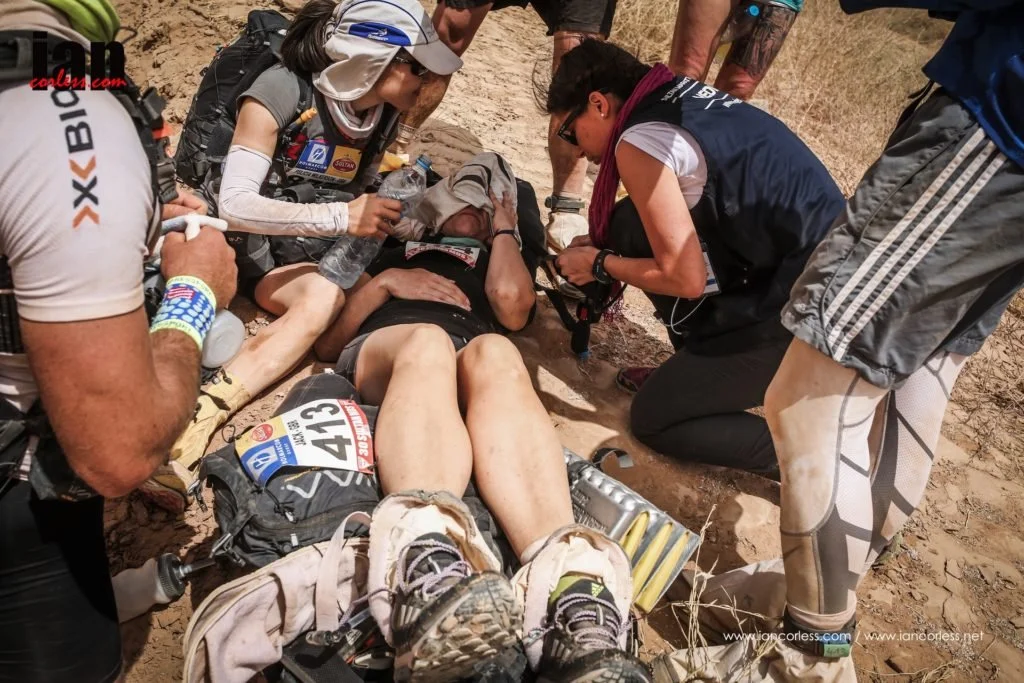
It's a tough race and anything can happen. Do not neglect to look after yourself, whether in camp or on the course. Photo: Ian Corless
3 - Put Your Feet Up
If you have the luxury, get some rest once you finish the stage. Much of the success in a multi-stage race comes from your ability to recover. Focus on you, find a moment of rest and tranquility, and recharge your batteries for the next day.
This also means sleeping well. Make sure your sleep system is adequate (mat plus sleeping bag) and that you have something warm to put on for the evening and early morning. This could be a a down jacket, or perhaps a long sleeved top plus a light weight wind jacket.
Nights are not silent...
And, whilst you might imagine a silent, magical desert night under a black star filled sky, the reality is not that romantic. You are with 1200 runners, a few hundred volunteers, and sharing a rather small tent with 7 people. It will only be silent if you have ear plugs. Ear plugs on a string are a great invention. You are much less likely to lose them should they fall out.
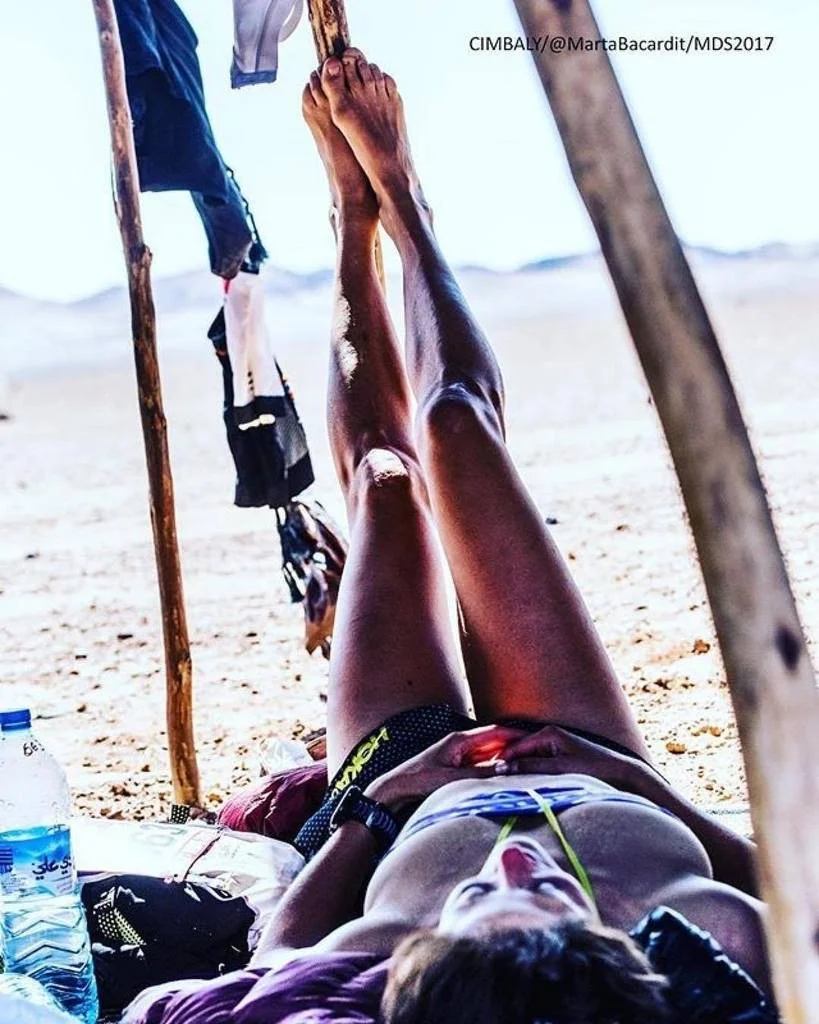
Rest is everything, as is packing light. A Raidlight buff is doubling up as my camp top, aided by a spare shoe lace. Photo: Marta Bacardit
4 - Set the Right Expectations Upfront
Don't promise your friends/family/partner that you will be in touch. You can send brief video messages to predefined contacts every day, but you may not have the energy to do so. Take the pressure off yourself.
Bringing your phone? If so, remember that it is not allowed to use it in MDS bivouac. Many people are there for the solitude so please respect that. Note that you may not have coverage for the majority of the race anyway. Why not take the very rare opportunity to be disconnected from everyday life for a week? Just have this magical time in the desert for YOU, not anyone else.
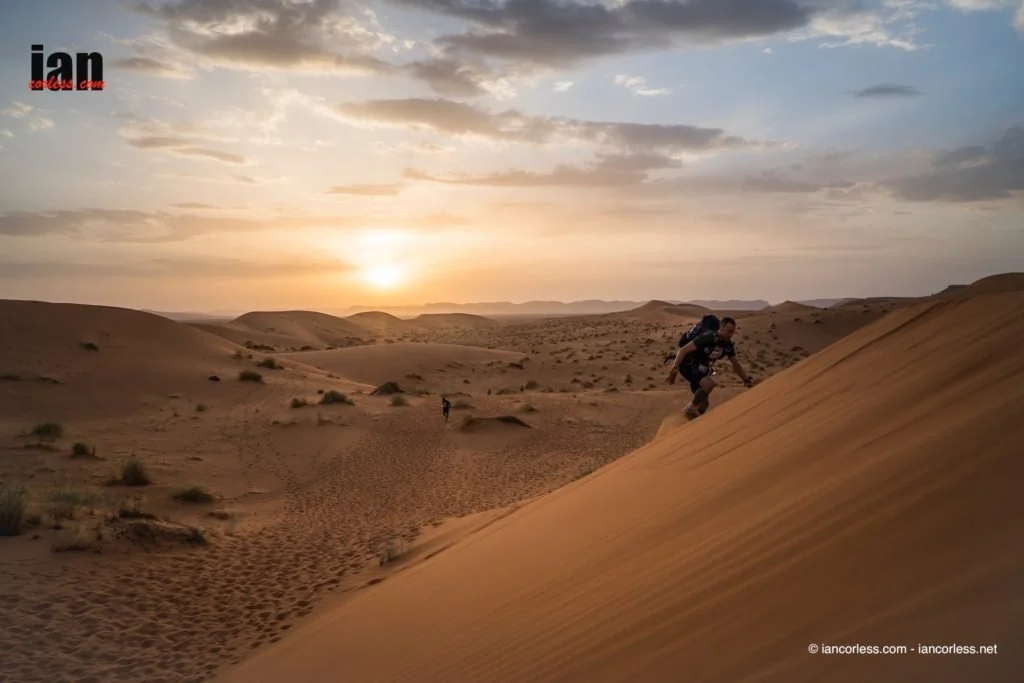
Immerse yourself in the desert experience. This is YOUR time. Photo: Ian Corless
5 - Manage Personal Care in Bivouac
Keeping clean in the Marathon des Sables camp is extremely important to avoid germs and illness. It is relatively simple. Use hand sanitiser often and/or clean your hands with water and soap. It's easy to bring a small piece of soap or some soap leaves. Use a long handled spoon for eating so you don't get your fingers in the food. Avoid high fiving kids on the course. Always clean your hands before eating and after toilet visits.
6 - Be a Surviver
Someone recently said to me: "Poo in a bag??! I'd rather hold it for a week, I have done that before..." Frankly I think it would make for a rather uncomfortable race....
I have realised that many competitors struggle with the “survival” element of Marathon Des Sables. However this is really part of what makes the experience so great.
The wind will blow straight through the open tents in the MDS bivouac. Sometimes the tents collapse due to heavy winds. Toilet facilities are incredibly basic and often the scarcely scattered bushes provide a more attractive option.
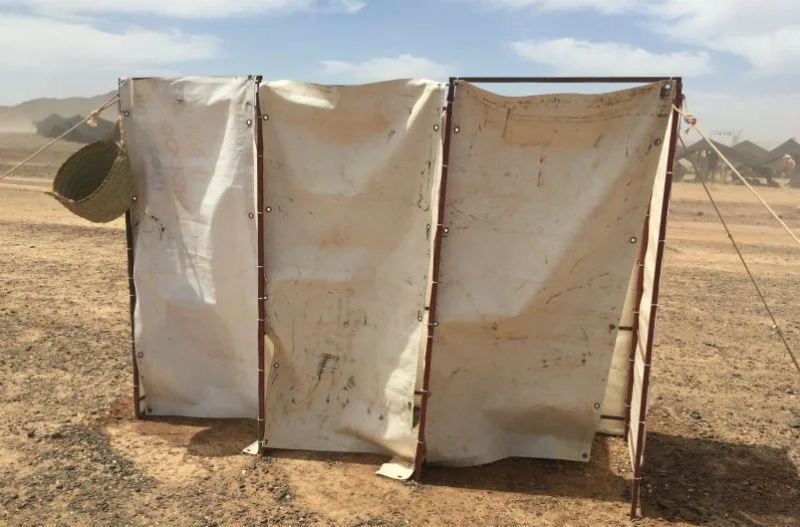
Whether you choose the toilets or the bushes, be prepared to not have luxuries around!
You might be cold at night. You might struggle to eat your food as your taste buds change and your body reacts to this new environment.
The contrast between Marathon des Sables camp and your comfort at home is striking. It's a simple existence that makes you feel truly alive and helps you reflect on what is important in life. Approach it with a positive can-do attitude. Embrace it as a unique opportunity for self-reflection and personal development, and everything will be much easier.
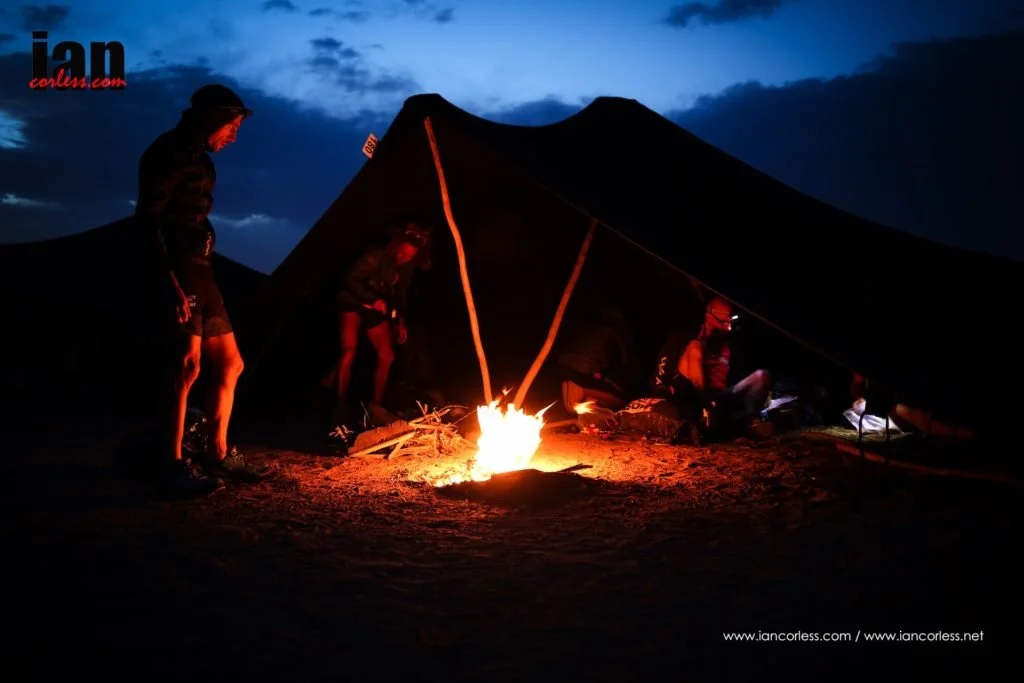
Embrace the opportunity for a simple existence with the bare necessities and making new friends for life.
Disclaimer: This information about Marathon des Sables camp life is based on my personal experience from racing five editions of the Marathon Des Sables. It is not intended to replace official race rules or communication from the race organisers. It is your responsibility to always check the official and up-to-date information and race rules. Whilst I believe this information to be correct at the time or writing, I take no responsibility for failed kit checks, penalties or other problems as a result of you relying on the information in this article.