
What Coaching Looks Like for Your First Marathon des Sables
The majority of athletes I coach for Marathon des Sables are preparing for their first edition of the race. Many have never run an ultra. Some have never run further than a marathon. A significant number walk portions of both their training and the event itself. What they have in common is not athletic background or finishing time — it is a serious intention to prepare properly and a willingness to engage with the process.
This is what that process actually looks like.
Who typically signs up for MDS
Marathon des Sables attracts a wide range of people. In any given edition, you will find elite runners at the front of the field, but the vast majority of the field are ordinary people who decided to do something extraordinary. They are professionals with demanding jobs. They may be people in their forties, fifties or sixties for whom this is a long-held dream. They could be walkers. They could be runners who have only ever done road races. Some who have never run further than a half-marathon. Once, I even coached someone to a successful finish who had never run more than five miles before he started his training with me.
The race is long, and the environment is unforgiving, but the daily distances (apart from the long stage on day four) are no greater than a marathon. Marathon des Sables the Legendary does not require elite fitness. It requires intelligent, thorough preparation. That distinction matters, and it is the foundation of everything I do as a coach.
The most common mistake — and why it matters
The single mistake I see most often among first-time MDS entrants is building volume too quickly, driven by a fundamental misunderstanding of what the race actually demands.
They see 250km and panic. They start accumulating mileage as fast as possible — long runs, back-to-back weekends, months of high volume. When the body starts sending warning signals such as aches, fatigue, or the beginning of an injury, they push through anyway because stopping feels like falling behind.
The result is that many first-timers arrive at the start line injured, exhausted, or both. Some never make it to the start line at all.
What most people miss is that MDS is not 250km non-stop. It is 250km split across seven days. Apart from the long stage, you are running no more than a marathon distance on any single day. A good coach who has been there understands this. They build preparation around what the race actually demands, not around the number that causes the panic.
Good preparation is precise and purposeful. It builds the specific capacities the race requires: efficiency over marathon distance, the ability to recover overnight and perform again the next morning, heat tolerance, self-management under fatigue. It does not require maximum mileage. It requires the right mileage, at the right time, for the right person.
Two clients, two first editions
Katie, a Consultant GI Pathologist in her mid-fifties, came to coaching with some previous marathon and ultra experience. She was also a competent hiker. But she needed confidence, especially around the distance, her speed, and the heat. She knew that she would be among the slower participants. She had thought about the MDS for six years before finding the courage to sign up, as the challenge gradually moved into reach in her mind.
Her goal was straightforward: finish MDS and enjoy it. She was not chasing a time or a placing. She wanted to cross the finish line having done the race well — feeling prepared and capable.
Over five months, we built her preparation around her goal. We focused on building confidence and establishing consistency in a varied training programme. The training included strength, yoga, walking with weight, and running. It was adapted to her workweek routine and frequent weekend travel. We used her commute for shorter backpack walks to seamlessly integrate some of the training into daily life. We also had an in-person training weekend in Morocco.
Katie finished. But not only that, she really enjoyed it. She confirmed that she is exceptionally strong in adverse conditions and highly capable of taking charge in challenging situations. Her kit and nutrition worked, and any anxieties she had faded quickly after the success of the first day. She describes it as “the journey of a lifetime”.
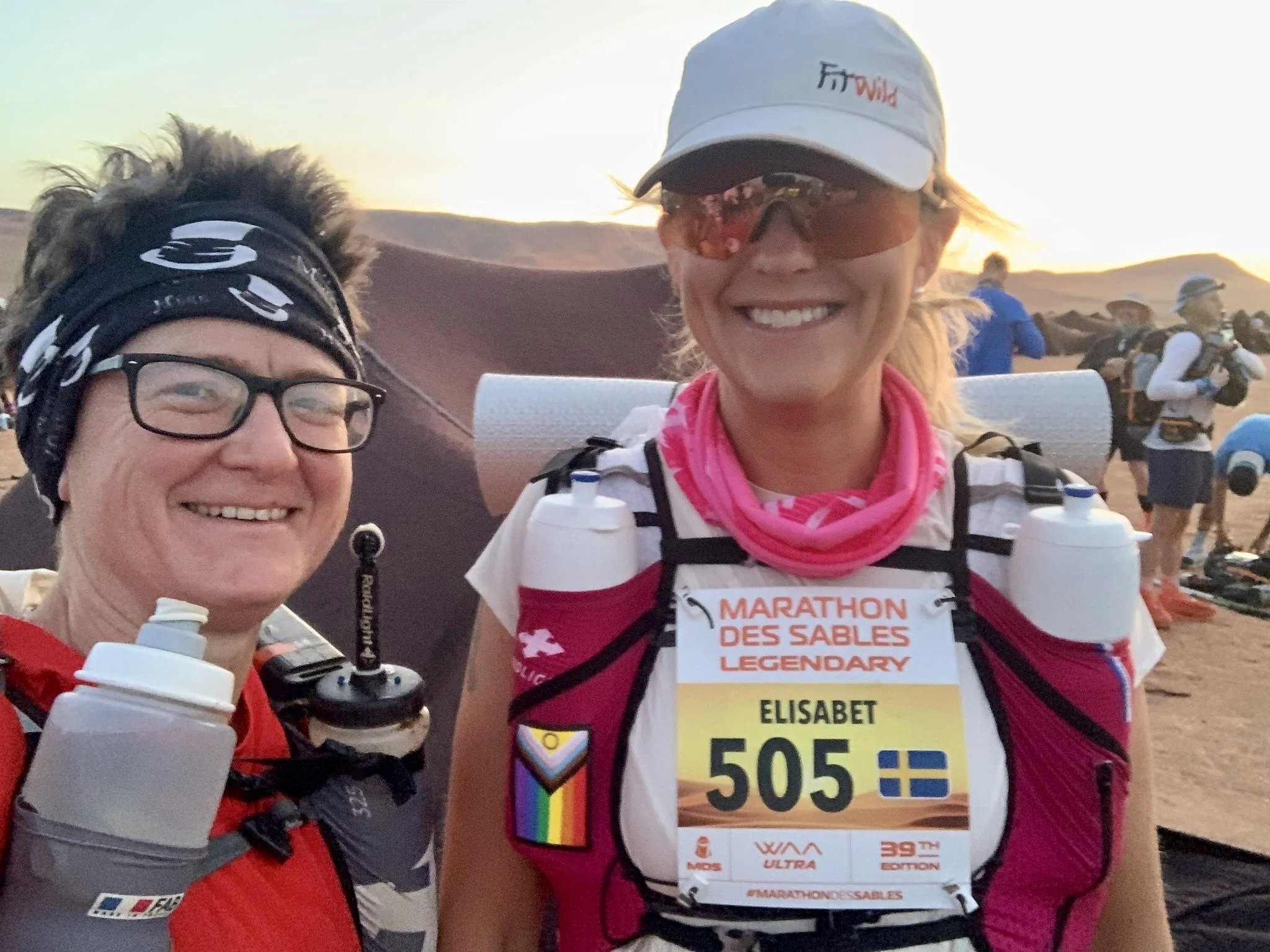
Katie and I in the 2025 edition of the Marathon des Sables the Legendary
Jorge was in his early sixties, an airline captain flying regularly between continents. His schedule was demanding and could sometimes change at short notice. Jorge was carrying some unwanted weight when we started working together and had never run an ultra. He had previous triathlon experience, including Ironman, as well as open water swimming.
The work with Jorge was as much about finding training that fitted his life as it was about the running itself. He ran, walked, and did strength training, and he paid close attention to what he ate and drank. Training conditions were not ideal with long-haul flying, time zone changes, and irregular sleep. The training schedule was always built around his reality and included recovery. He started his preparations nine and a half months before the MDS Legendary.
Jorge arrived at the start line having lost significant weight, developed a genuine running habit, and prepared well for the specific demands of MDS. He finished strong—in fact, he beat many men younger than him—and has gone on to pursue even bigger goals and to inspire others like him to live life to the fullest.
Perhaps the greatest gift was to his youngest son, who had had a lifelong dream to one day surf with his father. Jorge, through the fitness he developed in his training, was able to get on a surfboard for the first time in 30 years and fulfil this dream.
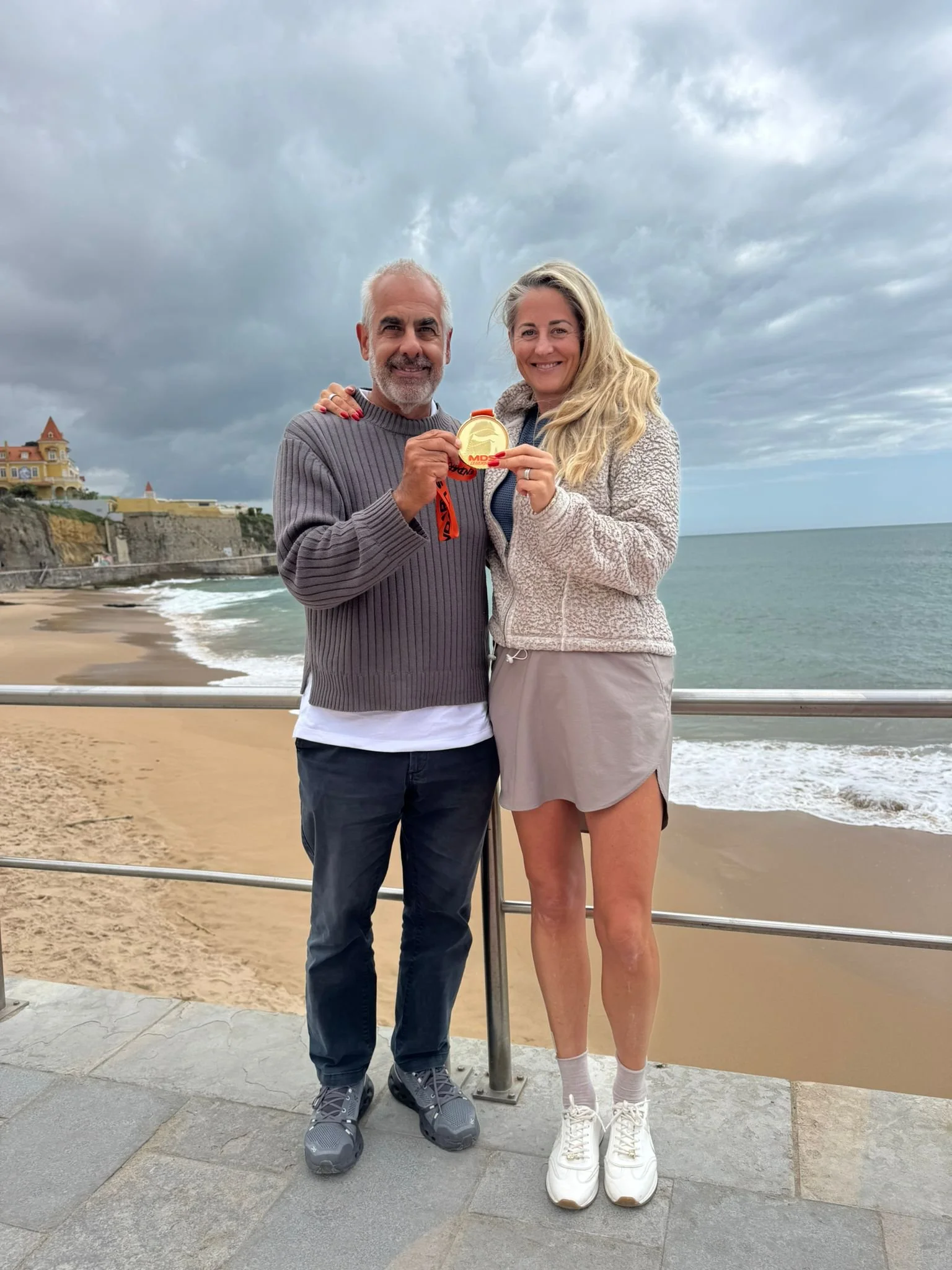
With Jorge after his first Marathon des Sables
What the preparation actually involves
Across a preparation block of five to 12 months (or more), the coaching covers more than training. It covers everything the race requires — and everything that most first-timers haven't thought about yet.
In the early months, the work is about building a base and establishing the habits — consistent training, recovery, sleep, healthy eating. It is also about beginning to understand the race.
In the middle months, the preparation becomes more specific. Kit decisions, race food planning and testing, foot care. One or more shorter ultras may feature here as interim goals.
In the final weeks, the preparation consolidates. The training tapers. The kit is finalised. Heat acclimation is executed. The medical certificate is signed. I answer any remaining questions, and we confirm the travel logistics. The client arrives at the start line well prepared. They have not only thought through—but also prepared for—almost everything that could go wrong.
What surprises many MDS first-timers that I coach, after the race, is how prepared they felt relative to others around them. Not fitter necessarily, but more ready. More settled. More organised. Better equipped in every sense.
A final note
Winning MDS twice is the experience I bring to this work, and I have coached podium finishers. But you do not need to want to win MDS — or even to run the whole thing — to benefit from that level of preparation. Most of the people I coach simply want to arrive at the start line as well prepared as possible and to cross the finish line having met the challenge well.
If that is what you are looking for, get in touch, and we can explore if we’re a good fit for each other. A conversation costs nothing.
You can also check out my FAQ, and my post on how to choose a coach for the MDS.